Historical statement · published 25 November 2024. References and circumstances reflect the time of publication.
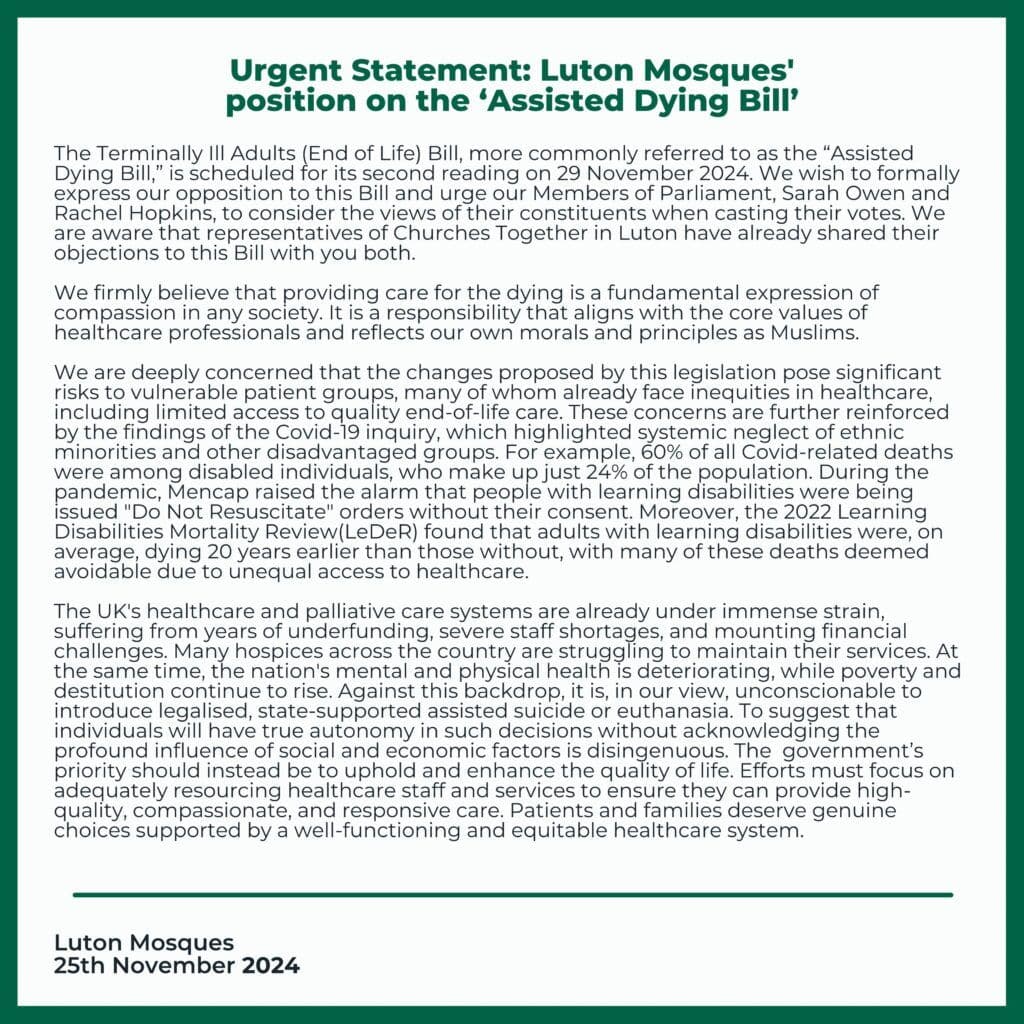
Accessible transcription of the complete dated statement image. The PDF is a copy of that original image; the three carousel slides are not repeated.
Open original image at full size
Urgent Statement: Luton Mosques’ position on the ‘Assisted Dying Bill’
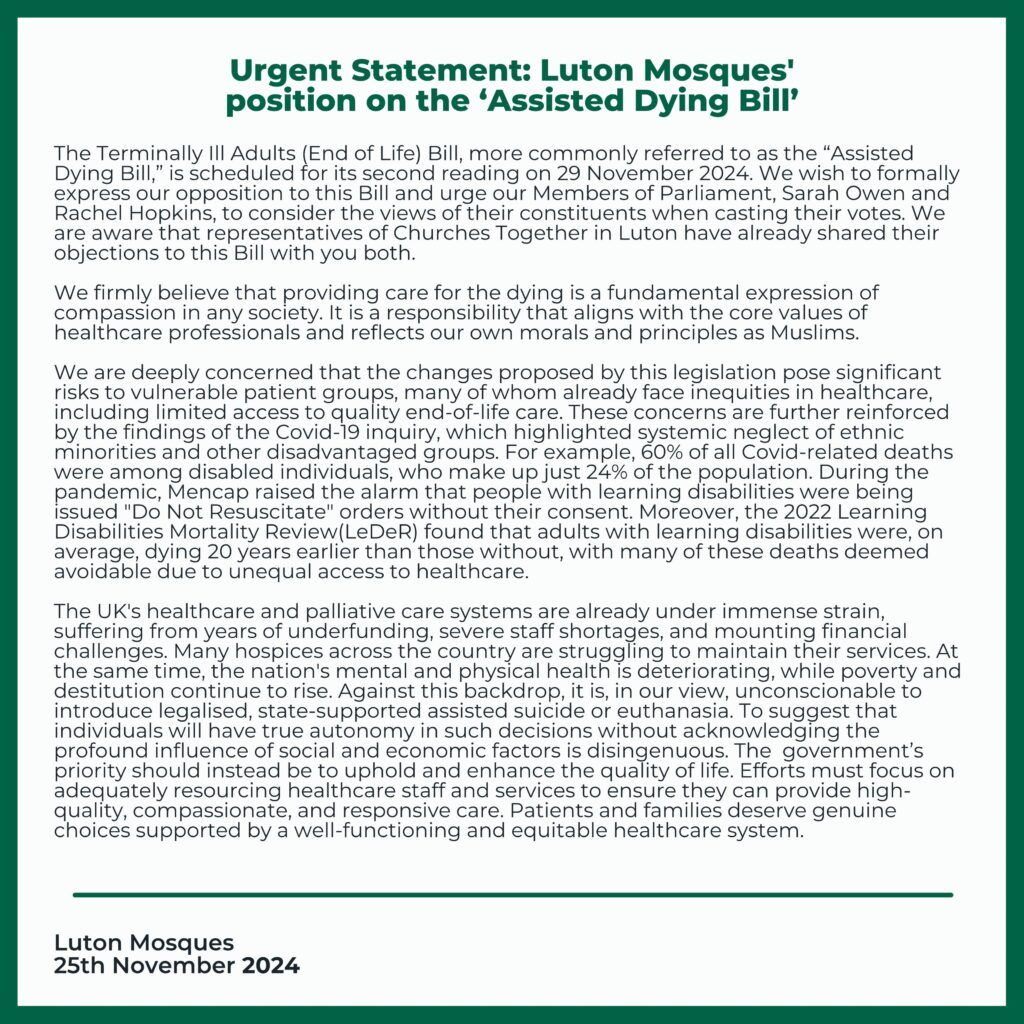
The Terminally Ill Adults (End of Life) Bill, more commonly referred to as the “Assisted Dying Bill,” is scheduled for its second reading on 29 November 2024. We wish to formally express our opposition to this Bill and urge our Members of Parliament, Sarah Owen and Rachel Hopkins, to consider the views of their constituents when casting their votes. We are aware that representatives of Churches Together in Luton have already shared their objections to this Bill with you both.
We firmly believe that providing care for the dying is a fundamental expression of compassion in any society. It is a responsibility that aligns with the core values of healthcare professionals and reflects our own morals and principles as Muslims.
We are deeply concerned that the changes proposed by this legislation pose significant risks to vulnerable patient groups, many of whom already face inequities in healthcare, including limited access to quality end-of-life care. These concerns are further reinforced by the findings of the Covid-19 inquiry, which highlighted systemic neglect of ethnic minorities and other disadvantaged groups. For example, 60% of all Covid-related deaths were among disabled individuals, who make up just 24% of the population. During the pandemic, Mencap raised the alarm that people with learning disabilities were being issued "Do Not Resuscitate" orders without their consent. Moreover, the 2022 Learning Disabilities Mortality Review (LeDeR) found that adults with learning disabilities were, on average, dying 20 years earlier than those without, with many of these deaths deemed avoidable due to unequal access to healthcare.
The UK's healthcare and palliative care systems are already under immense strain, suffering from years of underfunding, severe staff shortages, and mounting financial challenges. Many hospices across the country are struggling to maintain their services. At the same time, the nation's mental and physical health is deteriorating, while poverty and destitution continue to rise. Against this backdrop, it is, in our view, unconscionable to introduce legalised, state-supported assisted suicide or euthanasia. To suggest that individuals will have true autonomy in such decisions without acknowledging the profound influence of social and economic factors is disingenuous. The government’s priority should instead be to uphold and enhance the quality of life. Efforts must focus on adequately resourcing healthcare staff and services to ensure they can provide high-quality, compassionate, and responsive care. Patients and families deserve genuine choices supported by a well-functioning and equitable healthcare system.
Luton Mosques 25th November 2024